06.11.2026
Why Are There Rocks in a Sauna? 10 More FAQs About Sauna Rocks

Why are there rocks in a sauna heater, and what difference do they really make? Sauna rocks absorb and retain heat, help distribute it throughout the sauna, and create leil – the wave of hot, humid air produced when water is poured over hot rocks.
The rock type, rock load, size, shape, and placement all affect how a sauna heater performs. Choosing the right rocks is therefore an important part of getting the best performance and leil from the heater. Explore HUUM sauna stones to find the recommended rock types and sizes for HUUM heaters.
Most sauna owners know that rocks create leil. Fewer realize that their size, condition, and placement can also influence heating time, airflow, and heater performance.
So how many sauna rocks do you need? Why are round rocks recommended? How should sauna rocks be stacked, and when should they be replaced?
This guide answers 11 common questions about sauna rocks.
Sauna Rocks at a Glance
Sauna rocks at a glance come down to a few simple rules:
- Use rocks designed specifically for sauna heaters.
- Choose the rock size recommended for your heater.
- Use the rock load specified by the heater manufacturer.
- Place the rocks carefully rather than pouring them in.
- Leave enough space for airflow.
- Pour water onto hot rocks, not exposed heating elements.
- Check the rocks regularly as they crack and settle over time.
- For HUUM heaters, remember the 100/200/400-hour maintenance rule: inspect, rearrange, replace.
1. Why Are There Rocks in Sauna Heaters?
Why are there rocks in sauna heaters? Their main job is to store heat and release it gradually into the sauna.
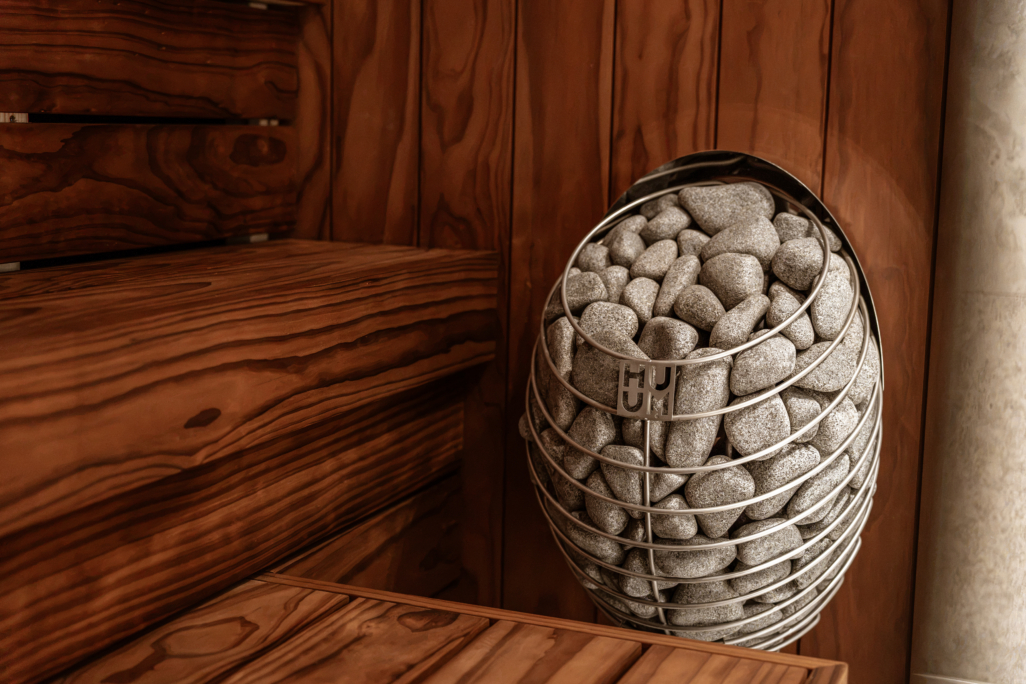
The rock mass acts as a buffer between the heating elements and the room. Instead of heat coming only from the elements themselves, the rocks absorb energy and help distribute warmth more evenly.
The rocks are also essential for creating leil. When water is poured onto hot sauna rocks, the stored heat causes the water to evaporate, creating the characteristic hot, humid wave of air associated with traditional sauna bathing.
Different sauna heaters are designed for different rock loads. The correct amount of rock is always determined by the heater design, so more rocks do not automatically mean better performance.
2. What Are the Best Sauna Rocks?
What are the best sauna rocks? The best sauna rocks are durable, heat-resistant natural rocks designed specifically for use in a sauna heater.
Rock type matters because sauna rocks are repeatedly exposed to high temperatures and sudden cooling when water is poured over them. Unsuitable rocks may crack, crumble, or deteriorate quickly.
HUUM recommends natural sauna rocks such as olivine diabase or olivine. HUUM’s own olivine diabase rocks are durable and well suited to repeated heating and cooling.
HUUM sauna rocks are available in two sizes:
- 1.2–2 in (3–5 cm)
- 2–4 in (5–10 cm)
Decorative rocks should not replace the main rock load unless they are specifically suitable for sauna heaters. Likewise, random rocks collected outdoors are not a reliable substitute for proper sauna rocks unless their composition and heat resistance are known.
3. How Many Sauna Rocks Do I Need?
How many sauna rocks do I need? The correct amount depends on the specified rock load of your sauna heater.
Different heaters are designed for very different amounts of rock, so always follow the manufacturer’s instructions.
HUUM heaters vary considerably in rock capacity. For example:
- CORE: about 88 lb (40 kg)
- CLIFF: about 165 lb (75 kg)
- HIVE Mini: about 330 lb (150 kg)
- HIVE: about 551 lb (250 kg)
These differences reflect the construction and intended performance of each heater.
Do not add extra rocks simply to increase the rock mass. Overfilling the heater can restrict airflow, while too few rocks may leave heating elements exposed.
For the best result, use the recommended rock load, rock size, and stacking method for your specific heater.
If you are still choosing the heater itself, rock capacity is only one part of the equation. The heater must also have the right power for the size and construction of the sauna. Read more in HUUM’s guide to choosing the right sauna heater size and power rating.
4. Why Does Rock Mass Matter in a Sauna Heater?
Why does rock mass matter in a sauna heater? Rock mass affects how much heat the heater can store and how steadily that heat is released.
A greater rock mass can store more thermal energy, which is one reason heaters with substantial rock capacity are often associated with a softer and more enveloping leil.
This stored heat also helps the rocks recover between pours of water. In simple terms, the rocks function like a thermal battery: they store heat while the heater is running and release it gradually during the sauna session.
However, the correct rock mass is always linked to the heater’s design. Adding more rocks than recommended can restrict airflow and slow heating.
The goal is not to fit as many rocks as possible into the heater, but to use the rock load the heater was designed for.
5. What Size Sauna Rocks Should I Use?
What size sauna rocks should I use? The right size depends on the sauna heater model and its construction.
HUUM sauna rocks are available in two main sizes:
- 1.2–2 in (3–5 cm)
- 2–4 in (5–10 cm)
Different HUUM heaters require different rock sizes. For example, CLIFF uses smaller 1.2–2 in rocks, while models such as CORE and HIVE use 2–4 in rocks.
Using the correct size helps the rocks fit properly around the heating elements while leaving enough room for air to move through the heater.
Always follow the rock size specified for your particular sauna heater.
6. Why Does HUUM Recommend Round Sauna Rocks?
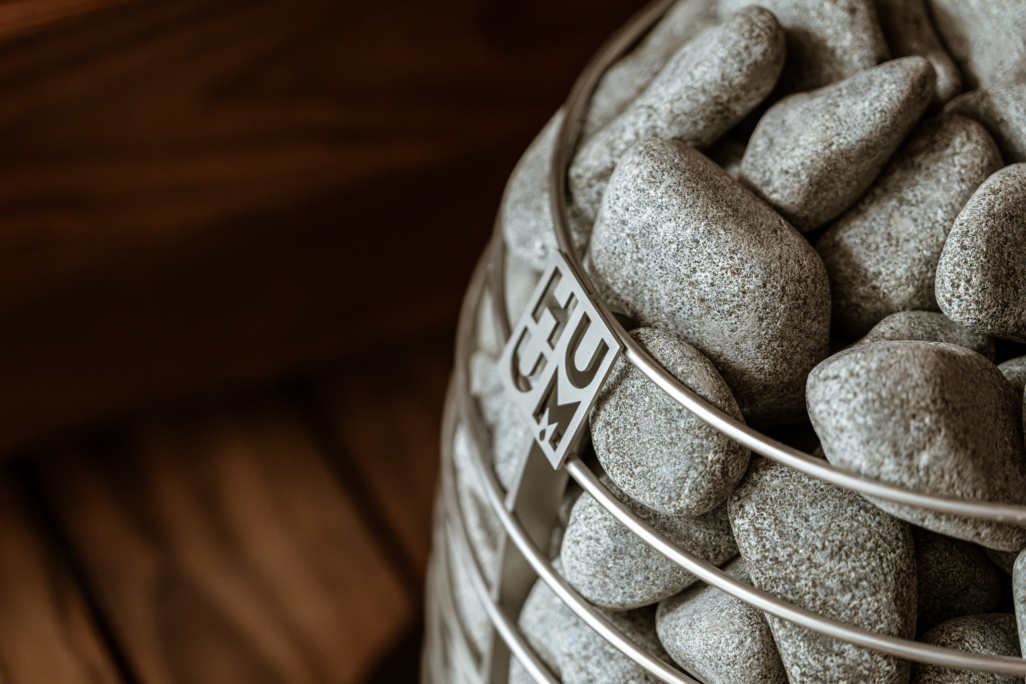
Why does HUUM recommend round sauna rocks? HUUM recommends them because their rounded shape allows water to move more freely into the lower layers of the heater.
Instead of evaporating only on the uppermost rocks, water can travel between the rounded surfaces and reach hot rocks deeper inside the rock mass.
This helps more of the stored heat contribute to the leil and can create a softer, more gradual experience.
Round sauna rocks also complement HUUM’s open-design heaters, where the rocks themselves form an important part of the heater’s appearance.
7. How Should Sauna Rocks Be Stacked?
How should sauna rocks be stacked? Properly stacked sauna rocks are essential for good airflow and reliable heater performance.
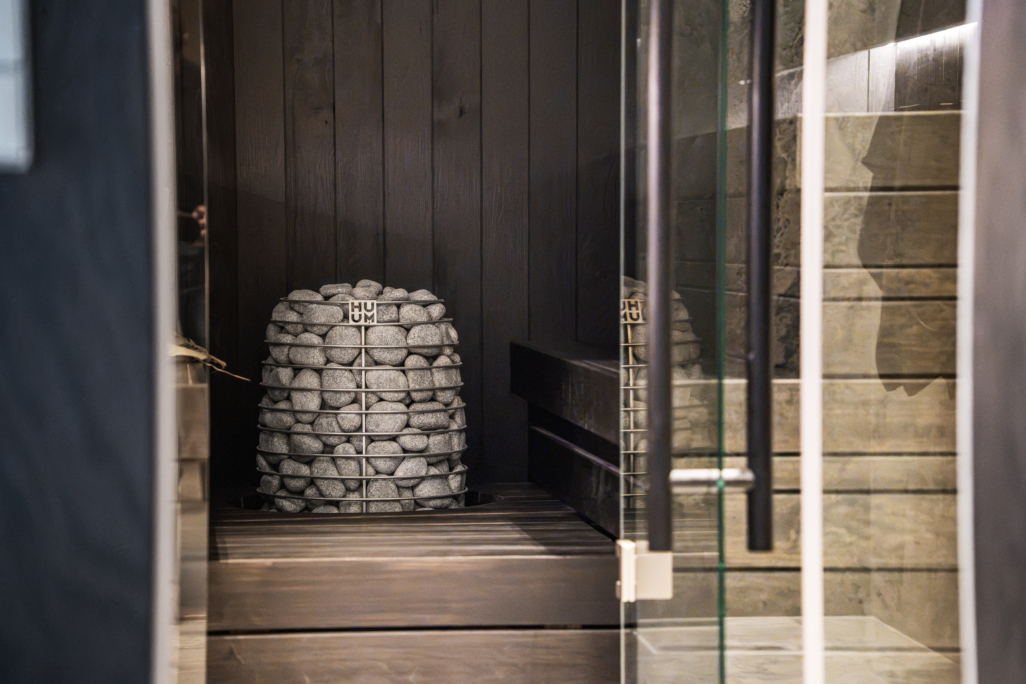
Place the rocks into the heater carefully rather than pouring or throwing them in randomly.
Arrange them between and around the heating elements without forcing, pressing, or bending the elements. The rocks should sit securely while still leaving enough room for air to circulate through the heater.
The heating elements should also be properly covered. Pouring water directly onto exposed elements can shorten their lifespan and create an excessively sharp burst of heat.
After stacking, check that the rocks are stable and that the recommended rock load has been reached.
Over time, rocks settle and compact, which is why restacking is an important part of regular heater care. For a more detailed routine, see HUUM’s complete guide to sauna heater, rock, and heating element maintenance.
8. Should Sauna Rocks Be Washed Before Use?
Should sauna rocks be washed before use? Yes, sauna rocks should be rinsed before installation to remove dust and loose particles.
HUUM recommends washing the rocks under running water before placing them into the heater.
There is no need to use detergents or cleaning chemicals. Clean water is enough.
Once the rocks have been rinsed, allow excess water to drain and place them into the heater according to the instructions for your particular model.
9. Can You Pour Water on Sauna Rocks?
Can you pour water on sauna rocks? Yes – pouring water onto properly heated sauna rocks is what creates leil.
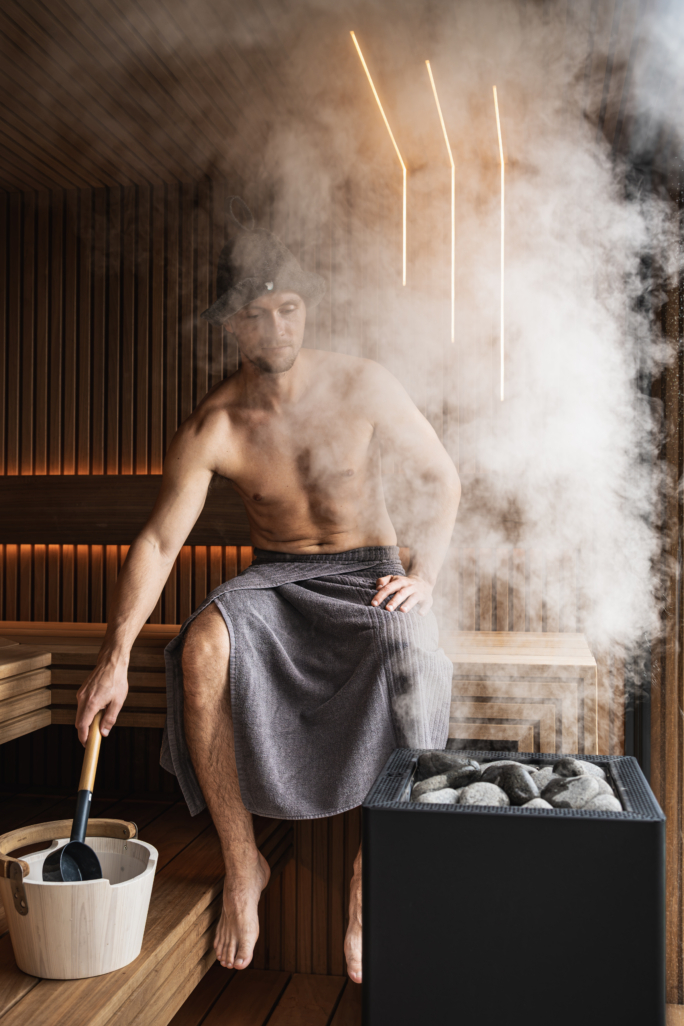
When water reaches hot rocks, the stored heat causes the water to evaporate. This temporarily increases the humidity and changes how the heat feels on the skin.
Rather than pouring a large amount of water at once, add it gradually and allow the rocks time to recover between pours. This gives you greater control over the intensity of the leil.
Water should be poured onto the hot sauna rocks rather than directly onto exposed heating elements.
And yes, this applies to electric sauna heaters too. The idea that you cannot pour water onto an electric heater is a common sauna misconception. Read more about this and other common misunderstandings in 3 Sauna Myths That Affect Your Sauna Experience.
Use clean water and always follow the heater manufacturer’s instructions.
10. How Often Should Sauna Rocks Be Replaced?
How often should sauna rocks be replaced? The replacement interval depends on how much the sauna is used, but regular inspection is just as important as replacement.
Repeated heating and cooling gradually cause sauna rocks to crack, settle, and deteriorate.
For HUUM heaters, a simple way to remember rock maintenance is:
The HUUM 100/200/400-Hour Rule
- 100 hours – inspect the rocks
- 200 hours – rearrange the rocks and replace damaged ones
- 400 hours – replace all sauna rocks
Following this schedule helps maintain airflow and reduce unnecessary stress on the heating elements.
When maintaining the heater, remove the rocks, clear away rock dust and fragments, inspect them individually, and discard damaged pieces before restacking.
For frequent sauna users, these maintenance intervals may arrive much sooner than expected.
For step-by-step instructions, see HUUM’s sauna heater maintenance guide.
11. How Do You Know When Sauna Rocks Need Replacing?
How do you know when sauna rocks need replacing? Look for cracking, crumbling, excessive rock dust, tightly packed rocks, or changes in heater performance.
One of the clearest warning signs is rock dust or small fragments collecting at the bottom of the heater.
A change in sauna performance can also be a clue.
If your sauna suddenly takes longer to heat, do not immediately assume the heater is the problem – check the rocks first.
5 Signs Your Sauna Rocks Need Attention
- The sauna takes longer to heat than usual.
- The leil feels weaker or less consistent.
- You see rock dust or fragments inside the heater.
- The rocks are cracked or crumbling.
- The rock layer has settled and become tightly packed.
If you notice these signs, remove and inspect the rocks. Replace damaged ones, clear loose debris from the heater, and restack the remaining sauna rocks correctly.
Do not wait until every rock is visibly broken. Regular inspection and timely replacement help maintain the performance of the sauna heater.
Take Care of Your Sauna Rocks for Better Leil
Taking care of your sauna rocks helps preserve efficient heating and consistent leil.
Choose rocks designed for sauna use and use the size recommended for your heater. Wash them before installation, stack them carefully, and inspect them regularly as they age.
For HUUM heaters, choose the appropriate natural olivine diabase sauna rocks and remember the 100/200/400-hour maintenance rule.
Good sauna rocks may seem like a small detail, but they play a central role in turning the heat of the heater into the soft, satisfying leil that makes a sauna feel complete.